


How to Choose the Right System for Your Business
Inventory problems rarely start big.
They creep in.
A missed delivery. Stock levels that do not match reality. Systems that do not quite line up.
Then it builds.
You run out of products you should have. You carry excess inventory that ties up cash flow. Your team spends time fixing problems instead of moving forward.
At that point, most businesses start looking for the best inventory management software.
At Cofficient, this is where we usually get the call.
Not because a business wants software.
Because they need control back.
What Is Inventory Management Software?
Inventory management software helps businesses manage inventory properly across the full lifecycle.
It allows you to track inventory, monitor inventory on hand, and understand exactly what is happening across your operations.
For many businesses, it starts as a way to move away from spreadsheets.
But the real value comes when it becomes part of a wider inventory management system.
That is where everything connects.
Inventory, accounting software, order management, and financial management all work together.
This is where Cofficient focuses.
Not just implementing software, but building a system that reflects how your business actually runs.
Why Inventory Breaks as Your Business Grows
Most systems work at the start.
Then the business grows.
More products. More sales channels. More complexity across the supply chain.
What used to be simple inventory tracking becomes difficult to manage.
You start to see:
- Stock levels you cannot trust
- Inventory data spread across multiple systems
- Gaps between warehouse operations and finance
- Time lost correcting errors
This is where basic inventory software starts to fall short.
And where the right inventory management solution becomes critical.
How Inventory Management Software Works in Practice
The difference shows in how your day-to-day operations run.
When stock arrives, it is booked in against a purchase order. Real-time inventory levels update immediately.
As items move through your warehouse, you can track inventory accurately across locations, bins, and batches.
Orders from your online store or multiple sales channels are processed automatically. Stock is allocated in real time, reducing errors and improving fulfilment.
Returns and adjustments are recorded properly. Your inventory levels stay accurate.
Over time, this gives you something most businesses lack.
Clear, real-time inventory insights.
At Cofficient, we focus on making sure this works in practice, not just in theory.
What to Look For in the Best Inventory Management Software
Most systems will promise similar features.
The real question is whether they work for your business.
You need a system that allows you to manage your inventory without creating more work.
That means:
- Real-time inventory tracking that reflects actual stock levels
- Strong inventory control and stock management
- Automation that removes manual processes
- Integration with accounting software and wider tools
This is where many businesses get caught out.
They choose software that looks right, but does not connect properly.
We see this regularly. Systems are implemented, but inventory, finance, and operations remain disconnected.
The result is the same problems, just in a different place.
Types of Inventory Management Systems
The best approach depends on your stage.
A small business may begin with inventory software for small operations or even free inventory management software with a free plan. These tools support basic inventory tracking and simple stock control.
But as the business grows, these tools often reach their limits.
This is where a cloud-based inventory management system or ERP becomes the right move.
These systems allow businesses to manage inventory across multiple locations while connecting financial management, CRM, and operations.
For more complex environments, a warehouse management system improves efficiency within the warehouse itself.
At Cofficient, we help businesses make this transition properly, so the system grows with them instead of holding them back.
What Is the Best Inventory Management Software?
There is no single answer.
The best inventory management software depends on how your business operates.
Tools like Zoho Inventory can be a good starting point for smaller businesses. They offer a simple inventory app that helps businesses to track their inventory and manage stock at a basic level.
For businesses operating across multiple sales channels or managing a more complex supply chain, more advanced platforms are required.
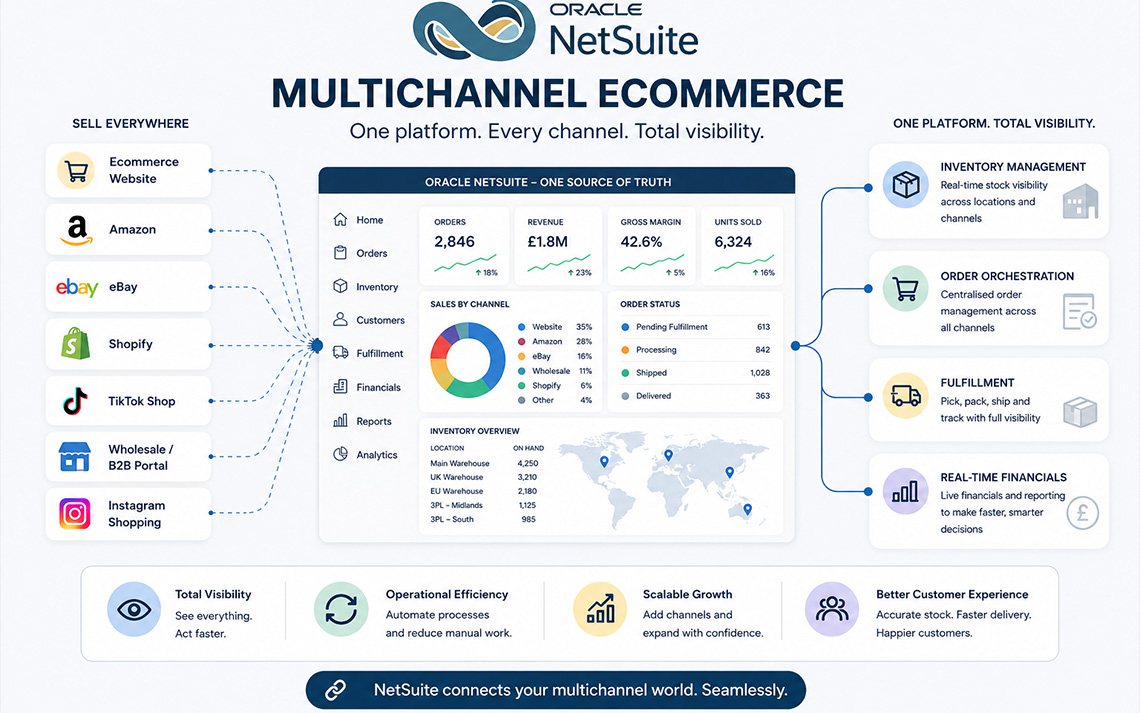
This is where systems like NetSuite come in.
They offer an all-in-one inventory and business management platform that connects inventory, finance, CRM, and operations.
At Cofficient, this is where we add value.
We do not just recommend software.
We make sure it fits your business, your processes, and your future growth.
Inventory Software vs ERP
This is where many businesses hesitate.
Inventory software focuses on stock.
ERP connects your entire business.
If your operations are simple, inventory software may be enough.
If you are dealing with multiple locations, growing sales channels, and increasing complexity, you need more than that.
An ERP allows businesses to manage inventory alongside finance, customers, and operations in one system.
This removes silos and gives you full control across your supply chain.
Getting this right early matters.
The Real Problems Inventory Software Solves
Most businesses already feel the impact.
Stockouts. Excess inventory. Poor visibility. Time lost fixing errors.
These issues affect more than stock.
They affect cash flow, customer experience, and your ability to grow your business.
Without proper inventory tracking, businesses struggle to track inventory levels and manage inventory effectively.
The right system fixes this.
It gives businesses to track what matters, align their systems, and operate with confidence.
This is one of the key reasons businesses move towards integrated systems.
How to Choose the Right Inventory Management Software
Choosing the right system starts with understanding your business needs.
You need to look at how your business operates today and how it will evolve.
Are you managing a small operation or growing across multiple locations? Are your warehouse operations simple or complex?
Then look at integration.
Your system must connect properly with your existing tools.
Finally, consider growth.
The right inventory management software should support your business as it scales.
At Cofficient, we guide businesses through this process, so they make the right decision the first time.
How Much Does Inventory Management Software Cost?
Costs vary depending on the system.
Free inventory management software may suit very small operations.
Mid-range tools typically cost between £50 and £300 per month.
More advanced systems cost more, depending on complexity.
But the real cost is not the software.
It is the cost of getting it wrong.
Where Inventory Management Is Heading
Inventory management is shifting towards real-time, cloud-based systems.
Automation is reducing manual work. Systems are becoming more connected.
Businesses that adopt this approach gain better visibility and control.
They make faster decisions and reduce operational friction.
Choosing the Right System for Your Business
There is no perfect system.
Only the right one for how your business runs.
The best inventory management software gives you control. It allows you to manage inventory across your business without guesswork.
How Cofficient Helps
This is where most businesses need support.
Not in finding software.
In making it work.
At Cofficient, we:
- Get under the skin of your business
- Understand your inventory, warehouse, and wider operations
- Recommend the right system based on your needs
- Implement it properly so it works from day one
- Support you as your business grows
We act as an extension of your organisation.
FAQs
What is the best inventory management software?
The best inventory management software depends on how your business operates.
If you run a small business with simple stock needs, tools like Zoho Inventory can be enough to get started.
As your business grows, you will likely need a more advanced inventory management system that connects inventory, finance, and operations.
This is where platforms like NetSuite stand out.
At Cofficient, we help you choose and implement the right system based on your business, not just what is popular.
Is free inventory management software enough?
Free inventory management software or a free plan can work for very small businesses managing basic inventory.
It allows you to track inventory, monitor stock levels, and manage simple processes.
However, as your business grows, these tools often fall short.
They lack integration, automation, and the ability to manage inventory across multiple locations or sales channels.
That is usually when businesses move to a more complete inventory management solution.
What is the difference between inventory software and ERP?
Inventory software focuses on stock control.
ERP connects your entire business.
An ERP system allows you to manage inventory alongside accounting software, CRM, and wider business operations.
If your systems are disconnected, ERP is often the better long-term solution.
How does inventory management software improve cash flow?
Poor inventory control ties up cash.
Too much stock increases costs. Too little stock leads to missed sales.
Inventory management software helps you maintain the right inventory levels by giving you real-time visibility and better forecasting.
This improves cash flow and reduces waste.
Can inventory management software integrate with other systems?
Yes. Modern inventory management software is designed to integrate with other tools.
This includes accounting software, e-commerce platforms, CRM systems, and supply chain management software.
Strong software integration is essential.
Without it, businesses still struggle to manage inventory effectively.
How long does it take to implement an inventory management system?
Simple inventory software can be set up in a few days.
More advanced systems, especially ERP platforms, can take several weeks or months depending on complexity.
At Cofficient, we focus on getting the system set up properly from the start, so it works for your business from day one.
What are the key features to look for?
The most important features depend on your business needs.
At a minimum, you should expect:
- Real-time inventory tracking
- Strong inventory control
- Order management
- Integration with other systems
More advanced systems offer automation, forecasting, and multi-channel management.
Do I need inventory management software for a small business?
Not always.
If your stock is low and easy to manage, basic tools may be enough.
However, once you start losing time, making errors, or struggling to track inventory levels, it is time to move to a proper inventory management system.
What is cloud-based inventory management?
Cloud-based inventory management allows you to access your system online rather than hosting it locally.
This makes it easier to scale, access data from anywhere, and connect different parts of your business.
Most modern systems now use this approach.
How do I choose the right inventory management software?
Start with how your business operates.
Look at your inventory, your warehouse setup, your sales channels, and your future plans.
Then choose a system that fits that.
At Cofficient, we guide businesses through this process to make sure they choose the right solution the first time.